The Scent Library Letters: A Living Archive of Fragrance, Memory, Imagination, and Self-Curation
Welcome to The Scent Library Letters.
This is not a traditional fragrance blog.
It is a living archive of scent, memory, care, imagination, and personal discovery. Some letters will teach you how to notice scent in ordinary life. Some will guide you through the Eau Method, Eau & Co's self-curation process. Some will enter the world of literature, history, art, and public presence through imagined fragrance conversations and scent profiles.
The goal is simple: to help you understand fragrance more deeply.
Not only as something you wear, but as something you remember, offer, carry, interpret, and become.
At Eau & Co, we believe fragrance is not decoration. It is atmosphere, identity, memory, and a private form of art. A scent can mark a life chapter, soften a memory, support confidence, express beauty, or become part of how a person understands themselves.
The Scent Library Letters were created for anyone who wants to begin that work, whether through private advisory or through their own slow, thoughtful self-discovery.
You do not need to own many perfumes. You do not need to know the difference between iris and violet, amber and resin, musk and aldehydes. You do not need to buy anything to begin.
You only need to notice.
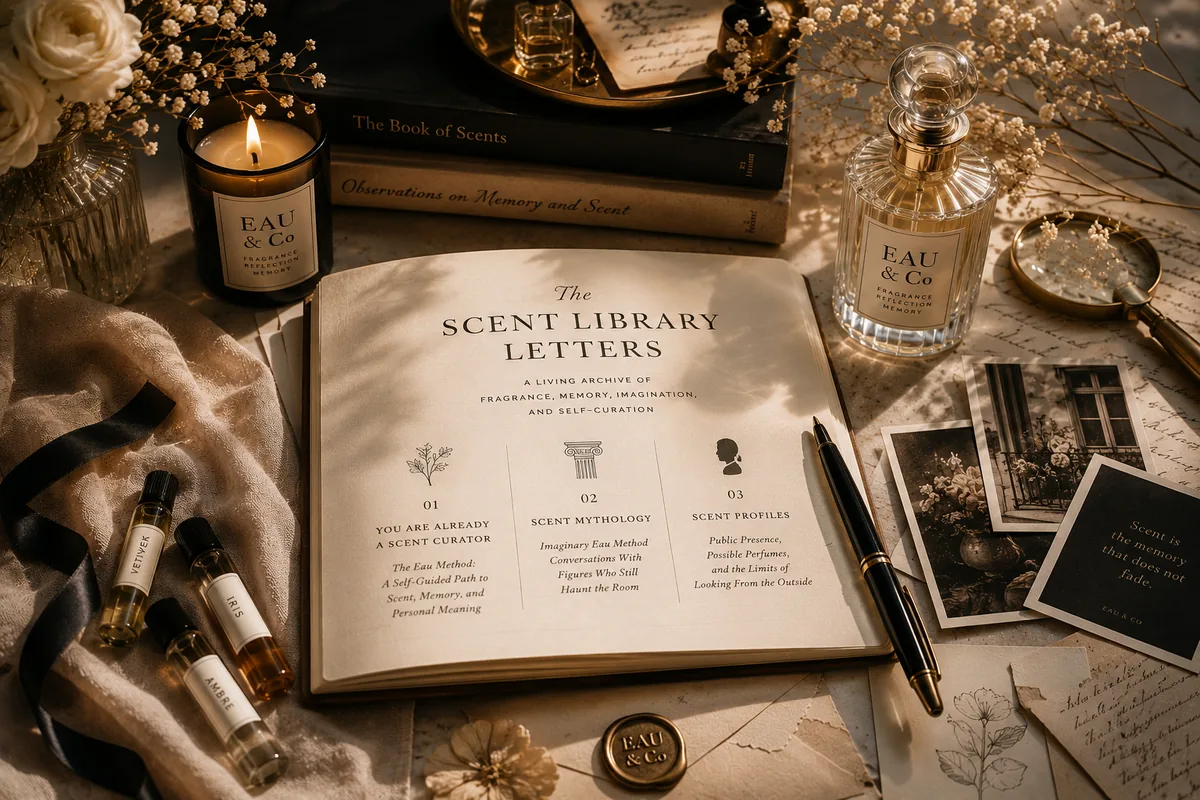
The letters are organized into three categories.
1) You Are Already a Scent Curator
The Eau Method: A Self-Guided Path to Scent, Memory, and Personal Meaning
This section is the heart of the journal.
You Are Already a Scent Curator is a guided scent journal for anyone who wants to understand fragrance as memory, identity, care, and personal art. It follows The Eau Method, a six-step self-curation process inspired by the questions at the heart of Eau & Co.
Through reflection, scent exercises, and small daily observations, readers begin to notice what moves them, map their scent memories, understand their taste, and translate something deeply personal into fragrance direction.
Each article may be used on its own, as slowly or as lightly as needed. Some readers may follow the full method from beginning to end. Others may return only to the question that feels most useful in a particular season of life.
The method begins with scent awareness. From there, we move through memory, reframing, emotional holding, taste, identity, and finally the translation of personal meaning into scent direction. This is the section for becoming your own scent curator. Not by copying someone else's favorite perfume, but by learning how your own life already speaks in scent.
2) Scent Mythology
Imaginary Eau Method Conversations With Figures Who Still Haunt the Room
Scent Mythology is Eau & Co's imaginative salon.
In this section, we invite literary figures, artists, muses, historic personalities, rebels, queens, and invented guests into an imaginary scent consultation. Each post begins with atmosphere: where they might sit, what they might drink, what the room might smell like, what they carry, what they reveal, and what remains unspoken.
Then we guide them through the Eau Method.
These conversations are fictional. They are not meant to be historical records or definitive interpretations. They are playful, thoughtful, and literary exercises in scent imagination.
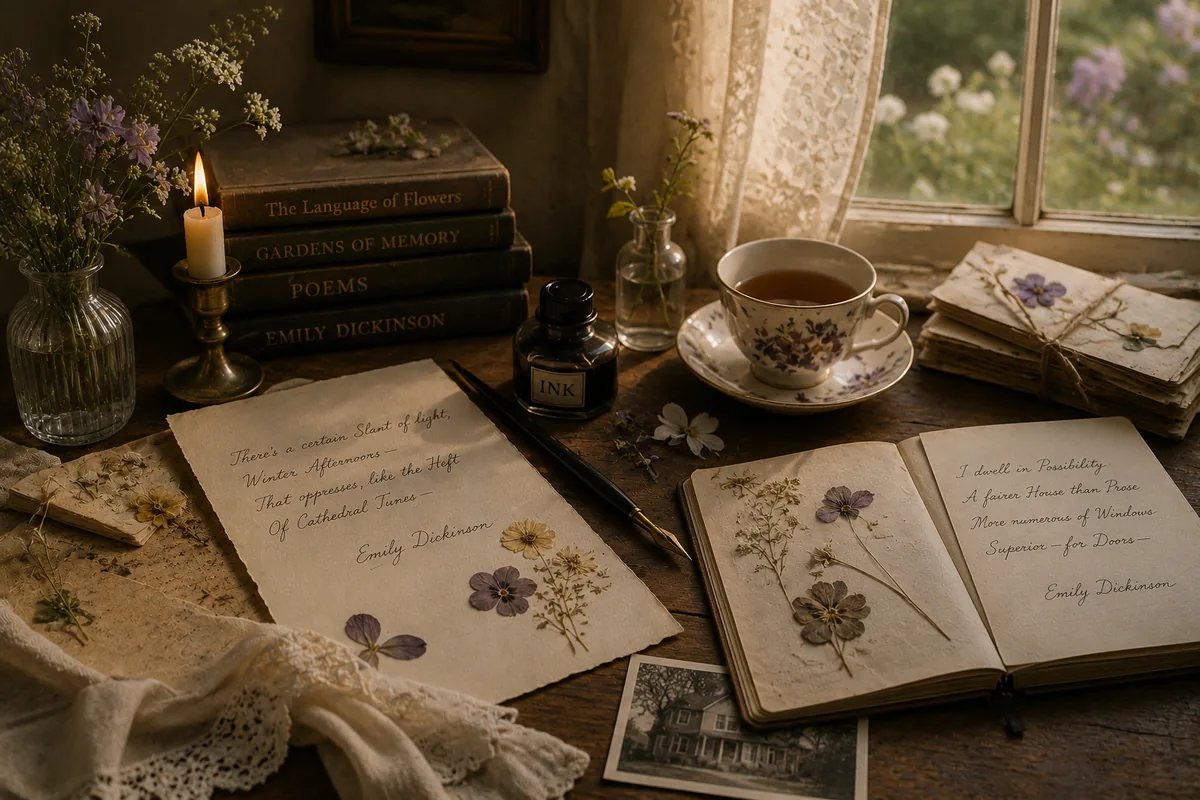
- What would Emily Dickinson's attention smell like?
- What would Jane Eyre choose if she wanted a fragrance that belonged only to herself?
- What would Cleopatra's scent profile reveal about power, beauty, and ceremony?
- What would an invented woman who wears pearls to disappear teach us about perfume and privacy?
Each Scent Mythology letter ends with a scent profile: what may have existed in their time, what could represent them in ours, and an Eau & Co reverie — a fragrance imagined from their atmosphere, memory, and emotional world.
This section is for wonder. It reminds us that perfume is not only product. It is story, symbol, character, and myth.
3) Scent Profiles
Public Presence, Possible Perfumes, and the Limits of Looking From the Outside
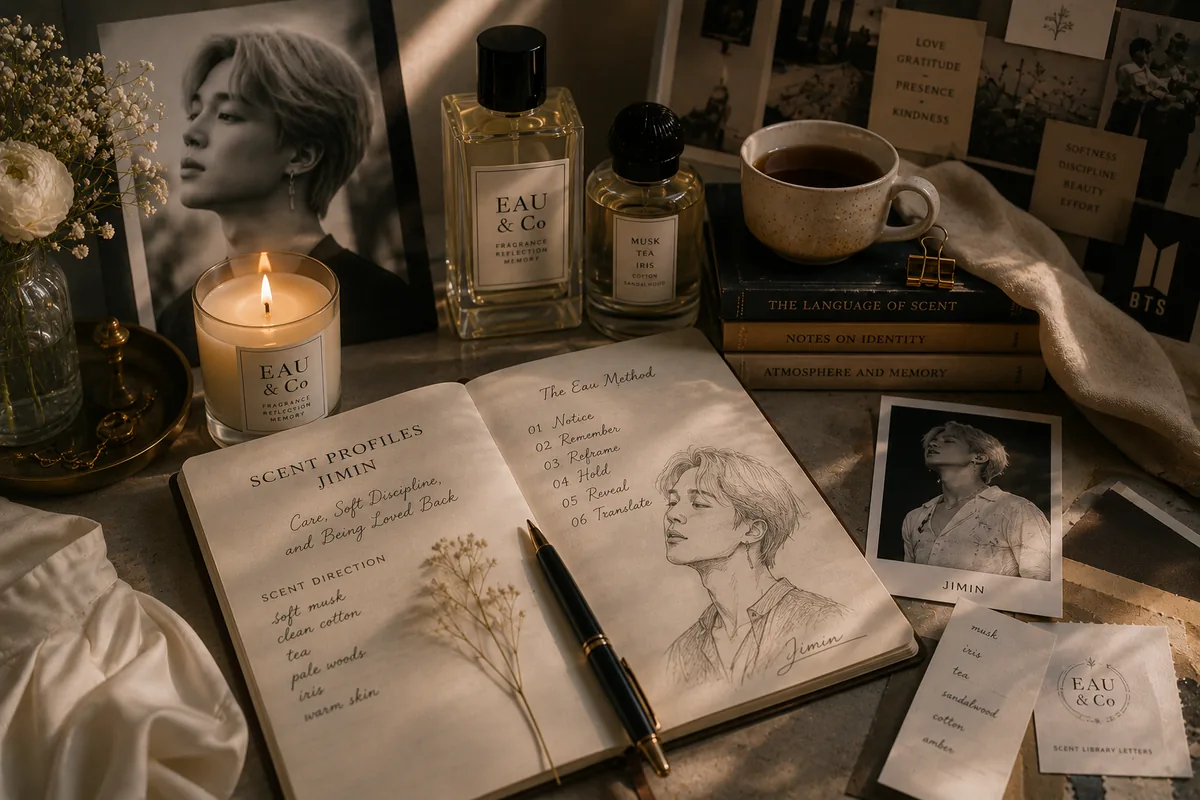
Scent Profiles explores public figures through the lens of fragrance, image, atmosphere, and known aesthetic clues.
Unlike Scent Mythology, these profiles are not imagined interviews. They are scent interpretations based on public presence: style, interviews, creative work, visual identity, public persona, and emotional impression.
But there is an important caveat.
A true scent discovery is intimate. It often requires conversation, memory work, skin testing, drydown observation, and time. No public scent profile can fully replace the depth of a private advisory process.
Still, these profiles can offer a beautiful starting point. They can help us ask:
- What does someone's public presence communicate?
- What scent might support that image?
- What scent might complicate it?
- What is the difference between the fragrance a person might wear and the fragrance they might need?
This section may include artists, performers, style icons, cultural figures, and public personalities. The goal is not to claim certainty. The goal is to practice interpretation. Because scent curation is not only about choosing. It is about learning to see.
How to Read These Letters
You may read The Scent Library Letters in order, or you may enter wherever you are. Come to You Are Already a Scent Curator when you want guidance, reflection, and exercises you can use in your own life. Come to Scent Mythology when you want imagination, literature, beauty, and symbolic fragrance storytelling. Come to Scent Profiles when you want to think about public presence, style, and how scent can translate image into atmosphere.
Together, these three sections form the public side of Eau & Co's world. These letters offer a special path: slower, self-guided, and open to anyone willing to pay attention. Over time, they are meant to help you build your own scent language.
To know what moves you. To understand what you remember. To recognize what feels beautiful to you. To notice what kind of fragrance supports who you are becoming.
Because the scent that belongs to you may not begin with a bottle. It may begin with a question.
It may begin with a room, a flower, a cup of coffee, a memory, a piece of fabric, a letter, a season, a person, a place, or something invisible that moved you before you knew why.
And that is where we begin.
More Letters